
The biggest World Cup in history kicks off June 11, 2026. Forty-eight teams. Sixteen host cities. Three countries. One hundred and four matches. If you’re an international fan flying in from Europe, South America, Africa, Asia, or Oceania to chase your team across North America, you’re about to discover that the luggage logistics are nothing like a normal vacation — and nothing like any previous World Cup, either. That’s exactly why this FIFA World Cup Luggage Guide exists.
This year’s tournament is the first ever co-hosted by the United States, Mexico, and Canada. Group stage matches will be spread across cities as far apart as Vancouver and Miami, with Mexico City and Toronto in between. Multi-leg travel is the rule, not the exception. So whether you’re following Argentina, France, Brazil, Japan, or any of the 48 qualified nations, this World Cup Luggage Guide will help you pack smart, ship smarter, and avoid the airline baggage chaos that ruins more World Cup trips than a missed offside call.
Table of Contents
Why the 2026 World Cup Is a Bigger Planning Challenge

The 2026 tournament runs from June 11 to July 19 — a full 39 days — across three countries with very different climates, customs rules, and transit networks. Group stage matches alone span 16 cities including Mexico City, Guadalajara, Monterrey, Toronto, Vancouver, Los Angeles, Seattle, Dallas, Houston, Kansas City, Atlanta, Miami, Boston, Philadelphia, and the New York/New Jersey metro area.
For most international fans planning travel to World Cup 2026, that means at least two flights inside North America after their long-haul arrival. Hauling oversized luggage through three border crossings, four hotels, and six match cities turns a dream trip into a logistical nightmare fast. Multi-city itineraries are the new normal — and the smart travelers are planning around that reality.
World Cup 2026 Packing Essentials
Before we get into shipping strategy, a quick rundown of what your World Cup 2026 packing list should include:
- Lightweight, breathable clothing — Summer temperatures across host cities range from mild in Vancouver and Toronto to hot and humid in Miami, Houston, and Monterrey.
- A rain layer — Summer thunderstorms are common across most US and Mexican host cities.
- Your team’s kit and a neutral outfit — Stadium dress codes are relaxed, but some hospitality venues require smart-casual.
- Comfortable walking shoes — Fan zones, transit, and stadium approaches add miles to your day.
- Power adapters — All three host countries use the same Type A/B sockets, which simplifies things, but bring a multi-port charger.
- Match tickets, passports, vaccination records, and entry permits — Carry-on only.
- Sun protection and reusable water bottles — Stadium-allowed bottles vary by venue.
The trap most international fans fall into: overpacking for a 30-day trip and then paying overweight fees on every internal flight. Which brings us to the smart play.
The Smart Play: Ship Your Luggage Ahead
Instead of hauling two checked bags through three countries, ship most of your gear ahead and travel with carry-on only. International travel luggage shipping has matured into a mainstream service — and for a tournament spread across 16 cities, it’s the difference between a relaxed trip and a hostage situation with your bags.
LuggageToShip partners with FedEx, DHL, and UPS — the three largest global logistics networks — to ship luggage to over 220 countries with savings of up to 70% off retail rates. For 2026 World Cup fans, that means picking up at your home address overseas and delivering directly to your first hotel in Mexico City, Los Angeles, Toronto, or wherever your team opens its group stage. Six months of free storage is included, which is useful if you’re flying in early, doing pre-tournament travel, and want gear waiting in the right city.
The pitch is simple: avoid airline baggage fees, skip the carousel lottery, and arrive at every match city with your bags already at the hotel.
Shipping Luggage to USA, Mexico, and Canada
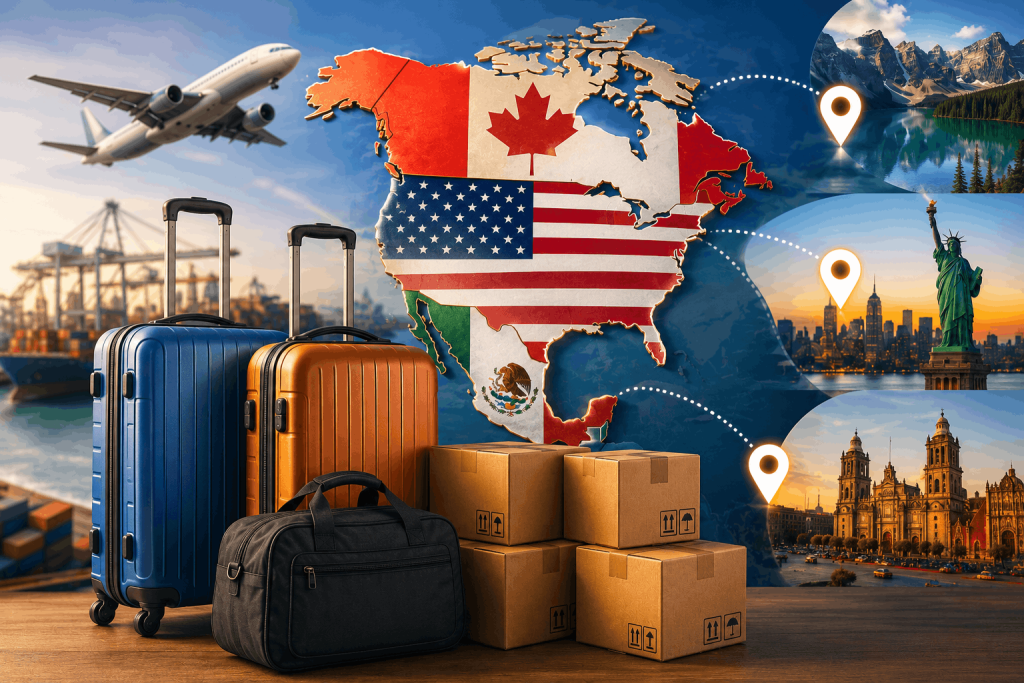
Each of the three host countries has slightly different customs rules and timing considerations.
Shipping luggage to USA: The US handles the most matches (78 of 104) across 11 cities. Customs is straightforward for personal effects, but allow 3–7 business days for standard international service. Express options are available for last-minute bookings.
Shipping luggage to Mexico: With three host cities (Mexico City, Guadalajara, Monterrey) and the tournament opener at Estadio Azteca, plenty of fans will land here first. Mexican customs requires clear declarations of personal items — LuggageToShip’s customs handling team manages paperwork as part of the service.
Shipping luggage to Canada: Toronto and Vancouver host 13 matches between them. Canadian customs is efficient for personal travel items but enforces specific rules on alcohol, food, and tobacco. Keep souvenirs and gifts separately documented.
If you’re following a team through multiple host countries, LuggageToShip’s storage service can hold gear at strategic points so you’re not lugging everything across every border.
World Cup Luggage Tips From the Pros
A few practical World Cup luggage tips picked up from international travel veterans:
- Book shipping 10–14 days before departure. Last-minute international shipping costs significantly more, and World Cup demand will spike capacity.
- Photograph everything you’re shipping before drop-off — receipts, items, and packed bag — for insurance purposes.
- Travel with a single carry-on plus a personal item. Pack a 3-day kit and your match-day essentials. Ship the rest.
- Use one home base per region. Pick a Western, Central, and Eastern host-city anchor and ship gear to those hotels rather than chasing it across every match city.
- Confirm hotel package acceptance before shipping. Most major hotels in host cities accept inbound guest packages — call ahead to confirm.
Conclusion
The 2026 FIFA World Cup is the largest, most spread-out football tournament ever staged — and for international fans, the logistics of getting yourself and your gear across three countries is the real challenge. Use this FIFA World Cup Luggage Guide as a starting point: pack light, ship smart, and let your bags travel separately from you while you focus on the football.
For most international fans, LuggageToShip is the most flexible option — global coverage, multi-carrier partnerships with FedEx, DHL, and UPS, and free storage to help you anchor gear in the right host region. Get an instant quote, plan your shipping ahead, and enjoy the tournament without lugging suitcases through airports for 39 days straight.
Frequently Asked Questions
When is the 2026 FIFA World Cup?
The 2026 FIFA World Cup runs from June 11 to July 19, 2026. The opening match is at Estadio Azteca in Mexico City, and the final is at MetLife Stadium in New Jersey.
Which countries are hosting the 2026 World Cup?
The 2026 World Cup will be hosted by the United States, Mexico, and Canada — marking the first time that three countries have co-hosted the tournament in history. There are eleven host cities in the US, three in Mexico, and two in Canada.
How can I avoid airline baggage fees during the World Cup?
Ship luggage ahead instead of checking it. Services like LuggageToShip pick up at your home, deliver to your hotel, and typically cost less than airline baggage fees once you factor in multiple internal flights between host cities.
Can I ship luggage between World Cup host countries?
Yes. LuggageToShip handles shipments between the US, Mexico, and Canada through its FedEx, DHL, and UPS partnerships. Cross-border customs paperwork is included as part of the service.
How early should I ship my luggage before traveling to the World Cup?
Book your shipment 10–14 days before departure for standard international service. Express options exist for shorter timelines, but rates climb and capacity tightens closer to kickoff.
What should I pack for World Cup 2026?
Pack lightweight breathable clothing, a rain layer, comfortable walking shoes, your team’s kit, sun protection, power adapters, and all travel documents. Most other gear can be shipped ahead.
Can I ship my luggage to a hotel in a host city?
Yes. Most major hotels in 2026 World Cup host cities accept inbound guest packages. Confirm with the hotel before shipping and provide your arrival date in the addressee field.
Is luggage shipping insured for international travel?
Yes. LuggageToShip includes default insurance on every shipment, with optional additional coverage available for high-value items. Always photograph contents before drop-off.
What happens if I’m following my team across multiple host cities?
Use the storage option to consolidate gear at regional anchor cities (Western, Central, or Eastern) instead of shipping it to every match city. LuggageToShip includes six months of free storage with every shipment.
Is shipping luggage cheaper than checking it on multiple flights?
For multi-bag, multi-flight World Cup itineraries, yes — almost always. Airline baggage fees stack per flight and per bag. Shipping ahead is typically one flat per-piece rate that scales much better for tournament-length trips.

