

TL;DR The cost of a checked bag is the fee on the booking page plus everything the booking page doesn’t show — overweight surcharges, the return leg, the hour at the counter and carousel, and the risk of a bag that doesn’t arrive. For heavy bags, multiple bags, or any trip with a connection, shipping ahead with LuggageToShip through FedEx, DHL, or UPS is often cheaper once the full cost is counted.
Introduction
Every airline shows you a number for a checked bag. It appears at the end of the booking flow, after the fare and before the seat map, and it looks reasonable — a modest fee, charged once, done. That number is the beginning of the cost of a checked bag, not the end of it.
The true figure includes the fee charged again on the way home. It includes the surcharge when the bag comes in over the limit, which it will, because bags always weigh more on the return. It includes forty minutes at the counter and the carousel that you could have spent doing anything else. And it includes a probability — small but real, and larger during holidays — that the bag goes to a different city than you do, and you spend the first day of the trip buying a toothbrush and a change of clothes.
Heading into 2027, with the airline fees 2026 brought us already climbing on most carriers, this guide lays out every component of what a checked bag actually costs, puts a structure on the hidden baggage costs most travelers never add up, and shows when the honest answer is to stop checking the bag altogether.
The Fee Is Only the First Line
Start with what’s visible. Most US carriers now charge for a first checked bag on standard economy fares, more for a second, and considerably more for a third. Basic economy fares on several airlines include no checked bag at all. International routes vary — some long-haul fares still include one bag, many no longer do.
That checked bag fee is real money, and it is also the smallest predictable line in the total. Here’s the full ledger.
| Cost Component | When It Applies | Visible at Booking? |
|---|---|---|
| First checked bag fee | Nearly every standard economy fare | Yes |
| Second bag fee | Any trip with two bags — typically higher than the first | Sometimes |
| Return-leg fees | Every round trip — all fees charge again coming home | No |
| Overweight surcharge | Bags over 50 lb (23 kg); often exceeds the base fee | No |
| Oversize surcharge | Bags over linear size limits; sports gear, large cases | No |
| Connection fees | On separate tickets, bags are re-checked and re-charged | No |
| Time at the counter and carousel | Every checked bag, both ends | Never |
| Mishandling risk | Higher on connections and peak days | Never |
| Family multiplier | Every traveler’s bag is charged separately | No |
The pattern is the point. The fee you see is the one line with a price tag. Everything below it is either charged later or paid in something other than money.
Hidden Baggage Costs, Line by Line
The Return Leg
Round trips double every bag fee. This is obvious the moment it’s stated and almost universally forgotten at booking, because the outbound fee is what’s on screen. Whatever the cost of a checked bag is on the way out, it’s the same on the way back — plus whatever you bought while you were there.
The Overweight Cliff
Airlines set a weight limit, usually 50 lb for economy, and the surcharge for crossing it is steep — frequently higher than the base fee itself, and on some carriers roughly double. Vacation bags don’t start overweight. They end overweight: souvenirs, gifts, a bottle for the host, the serving dish someone asked you to bring. A bag that cleared the scale outbound at 47 lb comes home at 54. The return leg is where the overweight surcharge lives.
For the full picture by carrier, our guide on what happens when your bag is overweight at the airport covers each airline’s limits and penalties.
The Family Multiplier
A couple with one bag each pays two first-bag fees out and two back. A family of four with four bags pays eight. Add one overweight bag and a second bag for the kids’ gear, and a family’s baggage bill for a single trip can approach the price of one of the tickets. It’s rarely added up because it’s never presented as a total — just as a series of modest-looking line items spread across two days of travel.
The Time Cost
Here the ledger stops being in dollars. A checked bag means arriving earlier to check it, standing in the bag-drop line, and waiting at the carousel on arrival — reasonably 20 to 40 minutes at each end on a normal day, considerably more during holiday weeks. Over a round trip that’s often more than an hour spent on the bag. Whether you value that hour at your hourly wage or simply as vacation time, it’s a cost, and it’s paid every single trip.
The Mishandling Risk
The U.S. Department of Transportation publishes mishandled baggage rates for every major airline monthly. The rate is low in absolute terms. It’s also not zero, it rises with connections, and it spikes in peak travel weeks. When it happens, the cost is a delayed-bag claim, replacement essentials, and a day of a trip spent without your things — a cost that’s small in expectation and very large when it lands on you.
The “Free Bag” Credit Card
A specific hidden cost worth naming: the airline credit card carried mainly for the free checked bag. The annual fee on those cards usually exceeds the cost of a couple of checked bags, which means the “free” bag is often the most expensive one on the plane. It’s worth doing the arithmetic once a year.
Carry-On vs. Checked: The Honest Comparison
The carry-on vs checked debate is usually framed as convenience against capacity. Framed as cost, it looks like this:
| Carry-On Only | Checked Bag | Shipped Ahead | |
|---|---|---|---|
| Fee | None on most fares | Per bag, per flight | Per piece, once |
| Overweight exposure | None | Yes — the 50 lb cliff | None — weight is priced, not penalized |
| Return-leg fee | None | Yes | Booked separately, same flat structure |
| Counter and carousel time | None | 20–40 min each end | None — bag is at the destination |
| Mishandling exposure | None | Yes | Carrier tracking end-to-end |
| Capacity | Limited | One standard suitcase | Unlimited pieces; bulky gear accepted |
| Best for | Short trips, light packers | One moderate bag, direct flight | Heavy bags, multiple bags, gear, families, connections |
Carry-on only is the cheapest option when it fits. The question for everyone else is whether the bag should go in the hold or go ahead of you.
When the Checked Bag Loses
Run a baggage fee comparison on these scenarios and the checked bag comes out behind more often than most travelers expect:
- Two or more bags. Second-bag fees stack; shipping prices each piece flat.
- Any bag over 50 lb. The overweight surcharge alone can rival the cost of shipping the whole bag.
- A round trip with a connection. Fees double, mishandling risk rises, and the carousel wait happens four times.
- Sports equipment. Skis, golf bags, and bikes fall into airline special-item tiers; shipped, they’re standard pieces.
- Families. The multiplier turns small fees into a large total.
- Holiday travel. Peak-week lines and mishandling rates make the time and risk costs their worst of the year.
For one moderate bag on a direct flight, checking it is fine and often cheapest — our guide to the cheapest way to ship luggage domestically says so plainly. The cases above are where the math flips.
The Alternative: Price the Whole Bag Once
Shipping a bag ahead changes the cost structure rather than just the number. You pay once per piece, with the weight priced in rather than penalized at a cliff. There’s no return-leg surprise — you book the trip home the same way and know the price in advance. There’s no counter, no carousel, and the bag is tracked by the carrier from your door to your destination.
LuggageToShip books that service through FedEx, DHL, and UPS at commercial rates — up to 70% below what the same shipment costs at a retail counter — and includes doorstep pickup, insurance, and tracking in the price.
How It Works
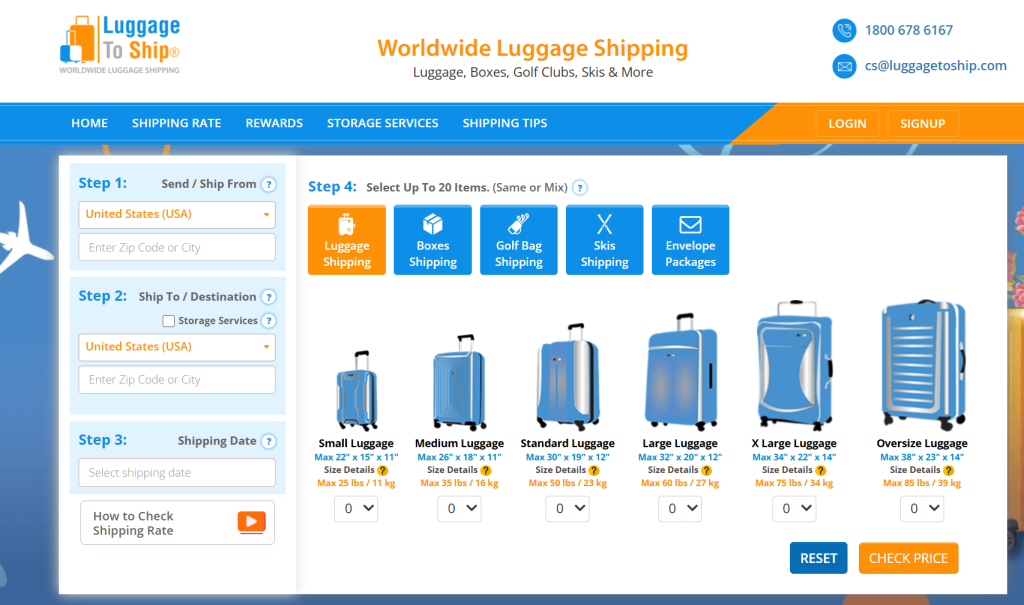
Step 1: Book Online or Call Us. Enter your pickup address, destination, and bag weight at luggagetoship.com. The cost calculator shows FedEx, UPS, and DHL rates side by side so you can compare against your airline’s fee before you decide.
Step 2: Receive Your Shipping Label. It arrives by email. Print it and attach it to the bag.
Step 3: Pickup or Drop-Off. A FedEx or DHL driver collects from your door, or drop the bag at any of 25,000+ FedEx and DHL locations.
Step 4: Delivered at Your Destination. Tracked door-to-door — hotel, home, resort, or dorm — before you arrive.
The right comparison isn’t the shipping quote against the first-bag fee. It’s the shipping quote against the first-bag fee, the return fee, the likely overweight charge, and an hour of your time. For a single light bag on a direct flight, the airline wins. For most other trips, it doesn’t.
Conclusion
The cost of a checked bag is a number the airline shows you, plus a longer list it doesn’t: the fee charged twice, the surcharge on the heavier bag you bring home, the hour at the counter and carousel, the family multiplier, and the chance the bag takes a different flight. None of those appear at booking. All of them are real.
Add them up once, honestly, for the kind of trip you actually take. If the total is a single modest fee, check the bag and don’t think about it again. If it isn’t — and for heavy bags, multiple bags, gear, families, and connections it usually isn’t — run the same route through the LuggageToShip cost calculator and let the two numbers decide.
Frequently Asked Questions
What is the real cost of a checked bag?
The visible fee plus the return-leg fee, any overweight or oversize surcharge, the time spent at the counter and carousel, and the risk of mishandling. For heavy bags, multiple bags, or connecting itineraries, the true total is often two to three times the fee shown at booking.
How much is a checked bag fee in 2027?
Most US carriers charge for a first checked bag on standard economy fares, more for a second, and considerably more for a third, with fees generally rising year over year. Check your specific airline — our airline baggage allowance guide lists current policies by carrier.
What are the hidden baggage costs airlines don’t show?
Return-leg fees, overweight and oversize surcharges, re-check fees on separate-ticket connections, time at bag drop and baggage claim, mishandling risk, and the annual fee on an airline credit card carried for a “free” bag.
Is it cheaper to fly carry-on only?
Yes, when your trip fits in a carry-on. Most fares include one, there’s no weight cliff, no return fee, and no carousel wait. The question is only what to do when a carry-on isn’t enough.
Is shipping luggage cheaper than checking it?
For one light bag on a direct flight, checking is usually cheaper. For bags over 50 lb, two or more bags, connections, sports gear, or family trips, shipping ahead is frequently cheaper once overweight fees and the return leg are counted — run the cost calculator for your route.
Why are bags overweight on the return trip?
Because travelers add souvenirs, gifts, and purchases. A bag that passes the scale outbound often crosses the 50 lb limit coming home, and the overweight surcharge frequently exceeds the base bag fee.
How much time does a checked bag add to a trip?
Typically 20–40 minutes at each end on a normal day — bag drop before departure and the carousel on arrival — and considerably more during holiday weeks. Over a round trip, often more than an hour.
Do checked bag fees apply on both legs of a round trip?
Yes. Every bag fee is charged per direction, so a round trip pays each fee twice.
What happens if a checked bag is lost or delayed?
File a report with the airline before leaving the airport, keep receipts for essentials, and track the claim. The DOT publishes mishandling rates by airline; connections and peak days carry the highest risk.
How does LuggageToShip price a bag differently from an airline?
One flat rate per piece with weight priced in, no overweight cliff, no separate return surcharge, and pickup, insurance, and tracking included. It books FedEx, DHL, and UPS at commercial rates up to 70% below retail.
Can I compare the cost of shipping with my airline’s bag fee before booking?
Yes. The LuggageToShip cost calculator shows FedEx, UPS, and DHL rates for your exact route in under a minute, so you can set it directly against your airline’s fee schedule.
Does an airline credit card make checked bags free?
It waives the fee, but the card’s annual fee usually costs more than a couple of checked bags a year. Whether it pays off depends on how often you fly that airline with checked luggage.
