TL;DR: Study abroad packing guide comes down to one principle: take less than you think, ship what you can’t carry, and store the rest for free. LuggageToShip ships to 220+ countries with FedEx, DHL, and UPS partnerships.
Introduction
The acceptance email arrives. The visa gets approved. The flights get booked. And then comes the moment every study abroad student eventually faces, standing in their bedroom surrounded by their entire life, wondering how any of this is going to fit in two suitcases and still leave room for the things they’ll inevitably buy abroad.
Study abroad packing is genuinely one of the most challenging packing exercises that exists — not because a semester requires more stuff than a vacation, but because the mental math is harder. You’re not packing for a week. You’re packing for four months, possibly in a country with a completely different climate, a different power grid, a different pharmacy situation, and different cultural expectations around how you dress. And unlike a vacation, if you forget something important, you can’t borrow it from someone in the next hotel room.
This guide cuts through the overthinking with a practical destination-by-destination packing framework, a clear decision system for what to bring versus what to ship, and the one storage option that most study abroad students don’t discover until their second semester.
Table of Contents
The Study Abroad Packing Principle
Before any list: the golden rule of packing for study abroad is bring less than you think you need. Every experienced study-abroad student says the same thing in hindsight — they brought too much. Every destination has shops. Every university city has pharmacies. Every country on Earth sells shampoo. You will find, buy, and acquire things abroad. Leave room for that reality.
The practical framework:
- Carry in your luggage: Documents, electronics, medications, a 2-week clothing foundation
- Ship ahead: Semester-specific gear, extra clothing, books, specialty items
- Store at home: Off-season clothing, items you won’t need for the semester, anything you’re unsure about
The Universal Study Abroad Packing Checklist
Regardless of destination, these items go on every study abroad checklist:
| Category | Essentials | Notes |
|---|---|---|
| Documents | Passport, visa, university acceptance, insurance | Carry-on ONLY — never check these |
| Electronics | Laptop, phone, charger, power bank | Check voltage compatibility |
| Adapters | Universal adapter or destination-specific | Research plug type before buying |
| Medications | Full semester supply + prescription documentation | Bring more than you think |
| Clothing foundation | 7–10 days of versatile pieces | Build around one color palette |
| Shoes | 2–3 pairs maximum | Walking shoes, casual, one smarter option |
| Toiletries | Travel-size starter kit | Restock locally within the first week |
| Study supplies | Laptop, notebook, pens | Buy textbooks locally where possible |
| Banking | Notify your bank; bring two payment methods | Card + backup card |
| Emergency contacts | University contact, home embassy, insurance | Save offline and on paper |
Destination-Specific Packing Lists
Here’s where study abroad packing gets nuanced. Climate, culture, and practical considerations vary dramatically by destination.
Study Abroad Spain Packing List
Spain runs warm through September and October, mild through November, and cooler in December–January in most cities. Key considerations:
- Clothes: Light layers for autumn warmth; a mid-weight coat for winter months; smart-casual clothes for evenings — Spanish social culture dresses up more than US or Australian equivalents
- Shoes: Comfortable walking shoes are essential; cobblestone cities are beautiful and brutal on inadequate footwear
- Adapter: Type C (two round pins) — buy before you go
- What to skip: Heavy winter gear unless you’re in Madrid or the north; beach items unless you’re near the coast
- Ship ahead: Anything beyond two weeks of clothing; specialist items unavailable in Spanish pharmacies
Study Abroad Australia Packing List

Australia’s seasons are reversed — a northern hemisphere fall semester (August–December) runs through Australian spring and summer. Hot, sunny, beach-accessible.
- Clothes: Lightweight summer clothing, swimwear, one light layer for air-conditioned spaces (Australian buildings are aggressively air-conditioned)
- Sun protection: High-SPF sunscreen is expensive in Australia — bring a good supply or budget for it
- Shoes: Thongs (flip-flops), walking shoes, one pair of casual sneakers
- Adapter: Type I (three flat pins angled) — specific to Australia and New Zealand
- What to skip: Heavy coats, winter gear, boots — you won’t need them unless you’re there July–August
- Ship ahead: Bulk items, extra clothing, any sporting gear
Study Abroad Europe Packing List

“Europe” covers dozens of climate zones and cultural contexts — but for a fall semester in Western or Central Europe (UK, France, Germany, Netherlands, Italy), the packing profile is similar:
- Clothes: Layering system identical to the fall travel guide — base, mid, outer, rain shell; European cities reward smart-casual for evening dining
- Rain layer: Non-negotiable in the UK, Netherlands, and northern France
- Shoes: One pair of good waterproof walking shoes and one smarter option; cobblestones everywhere
- Adapter: Type C or G depending on country (UK uses Type G; mainland Europe uses Type C)
- What to ship: Heavy winter coats for winter arrivals; ski gear if you’re planning Alps trips
- Healthcare: EHIC/GHIC card for EU destinations (UK students); travel insurance for everyone
Study Abroad Japan Packing List

Japan has a distinct packing profile that catches students off guard.
- Clothes: Fall semester means warm September, cool October, cold November; layering is essential; Japan’s work and social culture values neat, understated presentation
- Shoes: Comfortable walking shoes you can slip on and off easily — you’ll remove them constantly indoors
- Toiletries: Japanese skincare and drugstore products are excellent and affordable; bring enough to get through the first week, then explore local options
- Adapter: Type A (same as USA/Canada) — no adapter needed for American students; UK/European students need an adapter
- Cash: Japan remains a cash-heavy society; bring some yen or plan to withdraw immediately on arrival
- What to ship: Heavy items, books, specialty Western foods or comfort items unavailable locally
Study Abroad USA Packing List

The USA is one of the most popular destinations for international students — and one of the trickiest to pack for, because the country spans dramatically different climate zones. A semester in Boston looks nothing like a semester in Miami or Los Angeles.
- Clothes: Research your specific city’s climate carefully. Northern cities (Boston, Chicago, New York) require proper winter layers from November onward; Southern cities (Miami, Atlanta) stay warm year-round; West Coast cities (LA, San Francisco) are mild but cooler than most international students expect in winter
- Shoes: Comfortable walking shoes plus one smarter option; snow boots or waterproof footwear for cold-climate cities
- Adapter: Type A/B (the standard American plug) — European and UK students need an adapter; Australian and Japanese students typically need one too
- Healthcare: This is the most critical US-specific note — American healthcare costs are extremely high without proper insurance. Confirm your university provides student health insurance or purchase comprehensive coverage before arriving
- Banking: Notify your home bank before travel; set up a US bank account early in the semester to avoid ongoing international transaction fees
- What to ship: Winter clothing and heavy coats for cold-climate cities; sports gear; books and specialist items
- What to buy on arrival: Most daily essentials are competitively priced in the US; Target, Walmart, and Amazon deliver quickly to most campus addresses
Study Abroad Canada Packing List
Canada offers a world-class study abroad experience — and winters that international students from warmer climates consistently underestimate.
- Clothes: Canada’s winters are genuinely cold, particularly in Toronto, Montreal, Ottawa, and Calgary. A proper winter coat rated to at least -20°C, thermal base layers, and waterproof winter boots are non-negotiable for fall-to-winter semesters. Vancouver and Victoria on the West Coast are milder but very rainy
- Shoes: Waterproof winter boots for most Canadian cities; good rain boots for Vancouver; warm insulated footwear is worth the investment before you arrive rather than paying premium prices on arrival
- Adapter: Type A/B (same as USA) — the same adapter works across both North American countries
- Healthcare: Most Canadian provinces provide some health coverage for international students through university plans — confirm your coverage level before arriving and understand what’s included
- Banking: Major Canadian banks (RBC, TD, Scotiabank) offer student accounts; set one up quickly after arrival to avoid international fees
- What to ship: Winter clothing is heavy and expensive to buy last-minute in Canada; ship your winter gear ahead rather than scrambling for it in November. LuggageToShip’s free 6-month storage also means you can ship winter gear from home mid-semester if you didn’t anticipate the cold
- Winter survival tip: Dress in layers always; indoor heating in Canadian buildings is powerful, so you’ll overheat in a heavy coat indoors — the layer system matters even more than in Europe
The Ship-Versus-Carry Decision Framework
For every item you’re not sure about, run this decision:
| Item Characteristic | Decision |
|---|---|
| Used daily, irreplaceable | Carry in checked bag or carry-on |
| Needed but available locally | Buy on arrival, save the bag space |
| Bulky, seasonal, or heavy | Ship ahead with LuggageToShip |
| Uncertain if needed | Leave home; buy abroad if needed |
| Home comforts, care package items | Ship ahead or receive from family mid-semester |
How to Ship Your Luggage Abroad for a Semester
This is where study abroad packing gets genuinely easier than most students realize. Instead of trying to force four months of life into airline weight limits, ship the bulk of your belongings ahead and fly with just your essentials.
LuggageToShip handles international student shipping to 220+ countries, with doorstep pickup and delivery directly to your university accommodation or halls of residence.
How It Works (4 Steps)
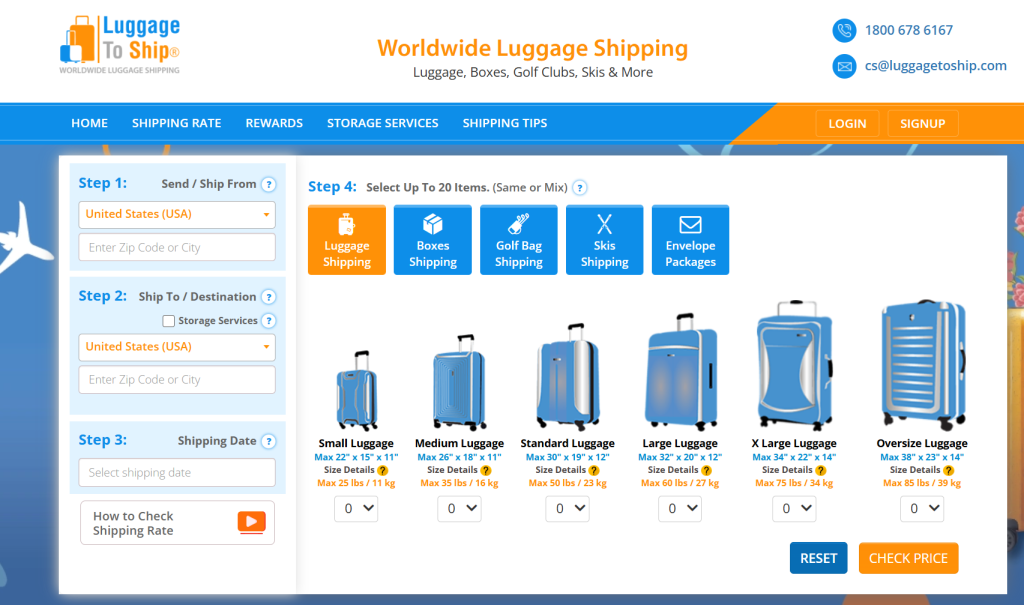
Step 1: Book Online or Call Us Visit luggagetoship.com for an instant quote based on your destination country, item details, and pickup address. Phone booking available with a dedicated agent for guidance on international shipping documentation.
Step 2: Receive Your Shipping Labels Shipping documents and labels arrive by email. Print, attach, and you’re ready — all customs and routing information is already included on the label.
Step 3: Pickup or Drop-Off A FedEx or DHL driver collects from your home address on the scheduled date, or drop off at any of 25,000+ FedEx and DHL locations worldwide.
Step 4: Delivered to Your University Accommodation Your belongings travel through the FedEx, DHL, or UPS network with full real-time tracking, then deliver to your halls, student house, or university mailroom. Confirm acceptance with your accommodation office before shipping.
Why LuggageToShip is the smart choice for study abroad:
- Six months of FREE storage — covers an entire semester; home items stay stored and ship to you mid-semester or ship home when you return
- Partners with FedEx, DHL, and UPS — three of the world’s largest logistics networks
- Ships to 220+ countries — every major study abroad destination covered
- Savings of up to 70% off retail carrier rates
- Default insurance included — important for electronics, books, and specialty items
- 24/7 customer support — including guidance on destination-specific customs requirements
The free storage is the study-abroad-specific game changer: ship your autumn/spring semester gear into storage at home, then have it forwarded to you mid-semester when you need a winter coat or different clothing. No parent trips to the post office required.
For more on student storage and shipping, see our student summer storage guide and international luggage shipping companies comparison.
What to Buy on Arrival (Don’t Pack These)
Every study abroad destination sells these — leave them home and buy on arrival:
- Shampoo, conditioner, body wash — heavy, leak-prone, universally available
- Cleaning supplies — your accommodation will have basics; buy what else you need locally
- Hangers — sold everywhere, take up enormous bag space
- Bedding — confirm with your accommodation; most student halls provide linen
- Textbooks — buy locally, use the university library, or use digital copies
- Snacks — the first week of exploring local food is part of the experience
Care Package Tips for Study Abroad
Setting up a care package system with family before you leave removes the “I wish I’d brought…” stress entirely. A few practical notes:
- Give family your exact university mailing address before departure
- Check your accommodation’s parcel acceptance hours and storage policy
- LuggageToShip handles care package shipping from anywhere in the world to your semester address — the same service, the same tracking, the same door-to-door delivery
Conclusion
Study abroad packing done right looks like this: a carry-on of daily essentials and documents, one checked bag of your two-week clothing foundation, and the rest shipped ahead through LuggageToShip — arriving at your halls before you do, without the airline overweight-fee drama. What doesn’t fit gets stored free for the semester and forwarded when you need it.
The semester abroad is the experience of a lifetime. The packing is just logistics. LuggageToShip handles the logistics — FedEx, DHL, and UPS partnerships, 220+ country coverage, six months of free storage, and 24/7 support — so you can focus on the experience.
Frequently Asked Questions on Study Abroad Packing Guide
What is the ultimate study abroad packing list?
Documents and medications in your carry-on, a 7–10 day clothing foundation in your checked bag built around one color palette, and everything else shipped ahead. Destination-specific lists for Spain, Australia, Europe, and Japan are in this guide.
How do I pack for study abroad?
Follow the carry-bring-ship-store framework: carry essentials, bring a two-week clothing foundation, ship bulky or seasonal items ahead, and store everything else at home for the semester.
What should I ship ahead for study abroad?
Bulky clothing, seasonal gear, books, comfort items, and anything that exceeds airline weight limits. LuggageToShip picks up from your home and delivers to your university accommodation.
Can I ship luggage abroad for a semester?
Yes. LuggageToShip ships to 220+ countries with door-to-door delivery, customs handling, and real-time tracking — including all major study abroad destinations.
How does LuggageToShip work for international students?
Book online, receive shipping labels by email, schedule a doorstep pickup or drop off at any FedEx or DHL location, and your items are delivered directly to your university accommodation.
What carriers does LuggageToShip partner with?
LuggageToShip partners with FedEx, DHL, and UPS — the three largest global logistics networks — for flexible routing to any study abroad destination.
Does LuggageToShip include free storage for students?
Yes. Every shipment includes six months of free storage — enough to cover an entire semester. Ship items from home mid-semester or ship your belongings into storage when you return.
What power adapter do I need for study abroad?
Spain and mainland Europe: Type C. UK: Type G. Australia: Type I. Japan: Type A (same as USA). Research your destination before buying to avoid incompatible adapters.
Should I bring or buy toiletries abroad?
Bring a one-week starter kit and buy locally on arrival. Toiletries are heavy and leak-prone, and every study abroad destination has well-stocked pharmacies and supermarkets.
How early should I ship my belongings before flying?
Ship 7–10 days before your arrival date for most international destinations. Allow 2 extra days for destinations requiring additional customs processing.
Can I receive care packages abroad through LuggageToShip?
Yes. LuggageToShip ships care packages from any origin to your semester address with full tracking and door-to-door delivery.
Is my luggage insured when shipped abroad?
Yes. Default insurance is included on every shipment, with optional higher coverage for electronics, specialist equipment, or valuable items.
What should I NOT pack for study abroad?
Full-size toiletries, bedding (confirm with your accommodation first), textbooks (buy locally or digitally), hangers, cleaning supplies, and anything available at your destination’s supermarkets.
How do I ship belongings home after the semester?
Book a return shipment through LuggageToShip — same process, same pickup from your accommodation. Or ship into free storage and forward when you’re ready.

