
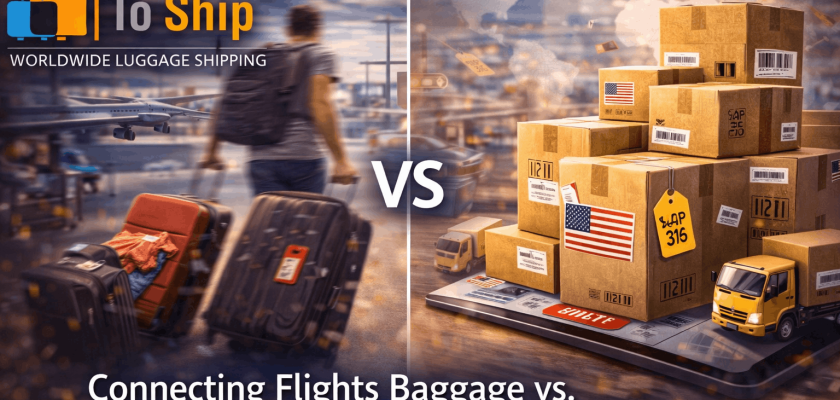
Connecting Flights Baggage can make or break a travel experience. While connecting flights offer convenience and flexibility, managing luggage across multiple airports, airlines, and layovers often introduces uncertainty, delays, and unexpected costs. Travelers frequently assume their bags will seamlessly transfer between flights—but reality can be far more complicated.
In today’s fast-paced world of international travel, choosing between traditional connecting flights baggage handling and professional luggage shipping services has become an important decision. This guide explores both options, helping you determine which is the smarter, more reliable choice for stress-free travel.
Table of Contents
Understanding Connecting Flights Baggage
When booking itineraries with multiple stops, connecting flights’ baggage procedures depend heavily on airline partnerships, baggage policy agreements, and airport regulations. In some cases, checked baggage is automatically transferred to your final destination. In others—especially during international journeys—you may be required to collect your luggage at baggage claim, clear customs, and recheck it for the next leg of your trip.
These variables introduce uncertainty, particularly during tight flight layovers or when traveling across different airline alliances.
Common Challenges with Connecting Flights Baggage
1. Inconsistent Baggage Transfer Rules
Not all airlines follow the same baggage transfer policies. While major carriers may transfer luggage automatically, smaller regional airlines or separate ticket bookings may require travelers to retrieve and recheck their bags. This can create confusion and add time pressure during layovers.
2. Limited Baggage Allowance
Each airline enforces its own baggage allowance and baggage policy. On connecting flights, travelers may encounter varying weight limits or baggage fees between segments, leading to unexpected expenses.
3. Risk of Lost or Delayed Baggage
The more connections involved, the higher the risk of lost baggage or delayed baggage. Multiple transfers increase handling points, making luggage transfer more complex and prone to disruption.
4. Tight Flight Layovers
Short flight layovers can be stressful, especially when customs clearance and baggage claim are required. Even a minor delay can cause travelers to miss connections—or leave their luggage behind.
What Is Luggage Shipping?
Luggage shipping is a door-to-door service that transports your bags directly from your home, office, or hotel to your destination. Instead of navigating airport logistics, travelers can ship their luggage ahead and travel light with minimal carry-on baggage.
Services like LuggageToShip specialize in reliable suitcase shipping and international luggage delivery. By partnering with global logistics leaders such as DHL, FedEx, and UPS, LuggageToShip provides secure, trackable shipping solutions to over 220 countries worldwide.
Connecting Flights Baggage vs. Luggage Shipping
Convenience
Managing connecting flights baggage often requires navigating baggage claim areas, rechecking luggage, and complying with varying airline policies. In contrast, luggage shipping offers door-to-door convenience, eliminating the need to handle heavy suitcases during travel.
Reliability
With multiple airline transfers, the risk of delayed baggage increases significantly. Luggage shipping provides real-time tracking and proactive monitoring, ensuring greater visibility and reliability throughout transit.
Cost Considerations
Airline baggage fees, excess baggage charges, and overweight penalties can quickly accumulate—especially across multiple flight segments. Luggage shipping services often provide cost-effective alternatives, particularly for international travelers or those carrying multiple bags.
Flexibility
Airlines impose strict baggage allowance and baggage policy limitations. Luggage shipping offers greater flexibility in weight and size, allowing travelers to ship boxes, sports equipment, or oversized luggage without airport restrictions.
Stress Reduction
Traveling with minimal carry-on baggage allows for smoother airport navigation, faster check-ins, and greater comfort during long-haul journeys. Shipping luggage separately eliminates the stress of luggage transfer during tight layovers.
When to Choose Luggage Shipping

Luggage shipping is especially beneficial for:
- International travelers navigating multiple flight connections
- Students relocating for study abroad or campus relocation
- Families traveling with extra luggage or sports equipment
- Business travelers visiting multiple destinations
- Travelers concerned about lost baggage or delayed baggage
By choosing a trusted luggage courier like LuggageToShip, travelers gain peace of mind and greater control over their belongings.
How LuggageToShip Simplifies Global Travel
LuggageToShip is designed to remove the complexities associated with connecting flights baggage. With door-to-door luggage delivery, travelers can ship bags ahead and focus on enjoying their journey.
Key benefits include:
- Reliable luggage pickup and baggage delivery services
- Real-time shipment tracking and monitoring
- Global coverage to over 220 countries and territories
- Partnerships with DHL, FedEx, and UPS for secure international shipping
- Flexible options for residential, hotel, or campus delivery
By eliminating the need for baggage claim and rechecking during flight layovers, LuggageToShip provides a seamless alternative to traditional airline baggage handling.
Frequently Asked Questions
Do airlines automatically transfer connecting flights baggage?
Not always. While some airlines transfer checked baggage to the final destination, others require passengers to collect their bags at baggage claim and recheck them—especially during international flights or when traveling on separate tickets.
What happens if my baggage is delayed during a connecting flight?
Delayed baggage may arrive on a later flight, requiring coordination with the airline for delivery. This can disrupt travel plans and cause inconvenience, particularly during tight layovers.
Is luggage shipping safer than checking baggage on connecting flights?
Luggage shipping provides enhanced reliability through real-time tracking and proactive monitoring. With fewer handling points compared to airline transfers, the risk of lost baggage or delayed baggage is often reduced.
Is luggage shipping more expensive than airline baggage fees?
Not necessarily. When factoring in excess baggage charges, overweight luggage penalties, and multiple airline baggage fees, luggage shipping can be a cost-effective alternative.
How far in advance should I ship my luggage?
For domestic travel, ship luggage at least 3 business days in advance. For international shipments, allow 5–7 business days to ensure timely delivery and customs clearance.
Can I track my shipped luggage?
Yes. LuggageToShip provides real-time tracking and monitoring throughout the shipping process, ensuring full visibility from pickup to delivery.
What types of luggage can be shipped?
Travelers can ship suitcases, duffel bags, boxes, sports equipment, and other personal belongings using a professional luggage courier service.
Final Thoughts
Connecting flights baggage may seem convenient, but it often comes with hidden complexities, inconsistent baggage policies, and the risk of lost or delayed luggage. As travel itineraries grow more complex, managing luggage across multiple connections becomes increasingly challenging.
Luggage shipping offers a smarter, more reliable alternative. By partnering with trusted global carriers such as DHL, FedEx, and UPS, LuggageToShip ensures secure, door-to-door delivery worldwide—allowing travelers to move freely without the burden of heavy bags.
Whether you’re navigating tight flight layovers, managing international connections, or simply seeking a stress-free travel experience, choosing luggage shipping over traditional connecting flights baggage handling can transform the way you travel. Travel lighter, travel smarter, and let your journey begin without limits.

