
TL;DR
The smartest World Cup Travel Routes for FIFA 2026 group host cities by region — West Coast, Central US, Mexico Triangle, Northeast Corridor, Cross-Border, and the Tournament Trail from Mexico City to MetLife. LuggageToShip handles luggage forwarding between every city on every route, with FedEx, DHL, and UPS partnerships and six months of free storage included.
Introduction
Sixteen host cities. Three countries. Up to 5,000 miles between the opening match and the final. The 2026 FIFA World Cup isn’t just a tournament — it’s a continental road trip, and the fans who plan smart World Cup Travel Routes will enjoy it far more than the ones improvising flights week by week. The geography is brutal. Atlanta to Vancouver is further than London to Tehran. Miami to Seattle is the same flight time as London to Cairo. Pick the wrong route and you’ll spend more time in airports than at matches.
This guide breaks down the six best multi-city World Cup Travel Routes for FIFA 2026 — what cities they cover, how to move between them, how long they take, and which fans they suit best. Pick whichever fits your team’s group and your budget, then use the framework at the end to build your own route.
The Geography of FIFA 2026 Host Cities
Before picking a route, understand the map. The 16 host cities cluster into recognizable regions:
| Region | Host Cities | Time Zones |
|---|---|---|
| West Coast | Vancouver, Seattle, San Francisco Bay Area, Los Angeles | Pacific |
| Central US | Dallas, Houston, Kansas City | Central |
| East Coast / Atlantic | Atlanta, Miami, Boston, Philadelphia, New York/New Jersey | Eastern |
| Canada East | Toronto | Eastern |
| Mexico | Mexico City, Guadalajara, Monterrey | Central |
Smart World Cup Travel Routes work within these clusters rather than against them. Bouncing between Vancouver and Miami on the same week is possible — but it’s not smart. The routes below group cities to minimize travel pain.
For complete venue details, see the official FIFA host cities page.
The 6 Best Multi-City World Cup Travel Routes
1. The West Coast Route
Cities: Vancouver → Seattle → San Francisco Bay Area → Los Angeles
Best for: Asia-Pacific fans landing on the West Coast, US-based fans on a coastal swing, anyone following a team in Pacific Time matches.
Transport between cities:
- Vancouver to Seattle: 3 hours by car or Amtrak Cascades train
- Seattle to SF: 2-hour flight
- SF to LA: 1.5-hour flight or 6-hour drive on Highway 1
Total distance: ~1,400 miles
Why this route works: Every city is in Pacific Time, so no jet lag between matches. Vancouver-Seattle is one of the easiest international border crossings in the world. The PCH drive from SF to LA is one of America’s classic road trips — pair it with a non-match day for an experience you’ll remember as much as the football.
2. The Central US Route
Cities: Dallas → Houston → Kansas City
Best for: Fans following a team with Central Time group matches, road trippers, US domestic travelers.
Transport between cities:
- Dallas to Houston: 3.5-hour drive or 1-hour flight
- Houston to Kansas City: 12-hour drive or 2-hour flight
Total distance: ~750 miles
Why this route works: All three cities sit in Central Time. Dallas-Houston is a short, easy hop. Kansas City completes the loop without too much extra mileage. Hotel prices in central US cities will be significantly more affordable than coastal alternatives, which matters for tournament-length stays.
3. The Mexico Triangle
Cities: Mexico City → Guadalajara → Monterrey
Best for: Fans of teams in Mexico’s group stage matches, Latin American fans, the tournament opener experience.
Transport between cities:
- Mexico City to Guadalajara: 1-hour flight or premium ADO/Primera Plus bus
- Guadalajara to Monterrey: 1.5-hour flight or 9-hour drive
Total distance: ~750 miles
Why this route works: The tournament opens at Estadio Azteca in Mexico City on June 11. Mexican ADO and Primera Plus buses are excellent — comfortable, reliable, and a fraction of US flight prices. Mexico City sits at 7,300 feet altitude, so plan an extra day to acclimatize before any matches.
4. The Northeast Corridor Route
Cities: Boston → New York/New Jersey → Philadelphia → (Atlanta as extension)
Best for: International fans flying into Boston, NYC, or Philadelphia. Fans of teams with East Coast group matches. The Round-of-32-to-final tournament arc.
Transport between cities:
- Boston to NYC: 4 hours on Amtrak Acela
- NYC to Philadelphia: 1.5 hours on Amtrak
- Philadelphia to Atlanta: 2-hour flight
Total distance: ~1,200 miles (Boston-Atlanta), but the BOS-NYC-PHL leg is just 310 miles
Why this route works: This is the only multi-city US World Cup route where Amtrak genuinely competes with flying. No airport security, no baggage fees, downtown-to-downtown service. For fans whose teams play in the Northeast cluster, this is the easiest route on the entire map.
5. The Cross-Border North Route
Cities: Mexico City → Houston → Dallas → (extending to Kansas City)
Best for: Fans following a team that opens in Mexico and progresses into the US knockouts. Cross-border experience seekers.
Transport between cities:
- Mexico City to Houston: 2.5-hour flight (international, allow time for customs)
- Houston to Dallas: 1-hour flight or 3.5-hour drive
- Dallas to Kansas City: 1.5-hour flight or 8-hour drive
Total distance: ~1,400 miles
Why this route works: Mexico hosts 13 matches, and many group stage runs begin there. This route lets you experience the tournament opener, then move north into the US heartland as your team progresses. Build buffer time for the international border crossing — peak World Cup demand will make US Customs longer than usual.
6. The Tournament Trail (Full Run)
Cities: Mexico City (opener) → Group Stage Cities → Atlanta (R32) → Philadelphia (R16) → NYC/MetLife (final)
Best for: Die-hards following a deep tournament run. Fans planning the entire 39-day stretch from June 11 to July 19.
Transport: Flight-heavy itinerary with up to 8 internal legs depending on team progression.
Total distance: 5,000+ miles
Why this route works: The knockout rounds progressively move east toward the final at MetLife. Atlanta hosts Round of 32 matches, Philadelphia hosts Round of 16 fixtures, and MetLife Stadium in New Jersey holds the final on July 19. Planning the trail backwards from the final and forwards from the opener gives you a logical framework even if you don’t know your team’s final group destination yet.
How to Build Your Own World Cup Travel Route

If none of the six routes above fits your team or budget exactly, here’s the framework smart fans use to build their own:
- Wait for your team’s group draw assignment, then identify all three group stage cities
- Group those cities into regional clusters — usually 2 of 3 group stage matches fall in adjacent regions
- Pick a regional anchor hotel for the cluster and ship gear there
- Plan internal transit by mid-week to avoid match-day surge pricing
- Build at least one buffer day into every multi-leg transition
- Pre-book everything — flights, hotels, Amtrak — at least 8 weeks out
- Ship luggage between cities instead of checking bags on every flight
For deeper guidance, see our FIFA 2026 Match Travel guide and the FIFA World Cup Luggage Guide.
The Luggage Problem on Multi-City World Cup Travel Routes
Every one of these routes shares the same pain point: hauling luggage through multiple cities, multiple airports, multiple hotels. Airlines charge per checked bag per leg. Overweight surcharges stack. Lost luggage rates spike on tight transfers. Across a tournament-length trip with 4–8 internal flights, you can easily spend more on baggage than on a decent hotel night.
The smart fans aren’t checking bags. They’re shipping ahead.
How LuggageToShip Powers Smart World Cup Travel Routes
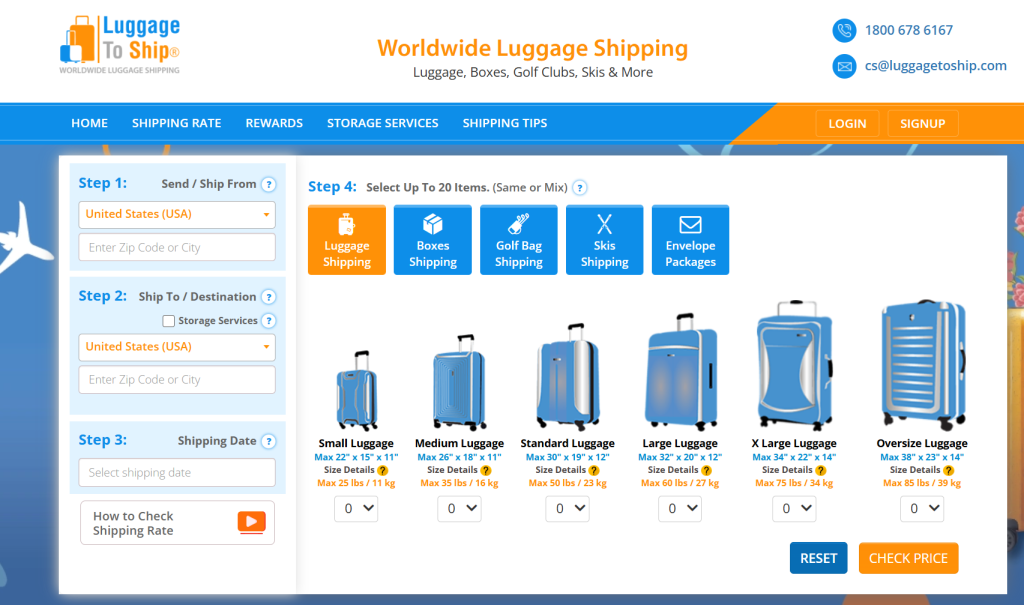
LuggageToShip is built for exactly this multi-city challenge. The service works in four straightforward steps:
- Book Online or Call Us — Get an instant quote at luggagetoship.com with full customer support
- Receive Your Shipping Labels — Emailed or mailed before you fly, attach to your luggage
- Pickup or Drop-Off — Doorstep pickup or drop off at any of 25,000+ FedEx and DHL locations worldwide
- Delivered to Your Destination — Directly to your next hotel, anywhere on your route
Why it works for multi-city World Cup Travel Routes:
- Partners with FedEx, DHL, and UPS — the three largest global logistics networks
- Ships to over 220 countries and territories, including every host city across the USA, Mexico, and Canada
- Savings claims of up to 70% off retail carrier rates
- Six months of free storage included on every shipment — perfect for anchoring gear in regional hub cities
- 24/7 customer support across the tournament window
- Default insurance included, with optional higher coverage available
The practical workflow on any multi-city route: travel with carry-on only, ship the rest of your gear ahead to your next hotel before you fly out of your current city. Your luggage moves separately while you focus on the football.
To Wrap Up
The best World Cup Travel Routes for FIFA 2026 work with the geography, not against it. Group host cities by region, move by Amtrak when you can, ship luggage ahead with LuggageToShip, and build buffer days into every transition. Whether you’re doing the West Coast swing, the Mexico Triangle, the Northeast Corridor, or the full Tournament Trail to the final at MetLife, the same principles apply.
Get an instant quote, plan your route, and travel like the tournament was built for you.
Frequently Asked Questions
What are the best World Cup Travel Routes for FIFA 2026?
The six smartest routes are the West Coast Route, Central US Route, Mexico Triangle, Northeast Corridor, Cross-Border North, and the full Tournament Trail from Mexico City to MetLife Stadium.
How many host cities does the 2026 World Cup have?
Sixteen host cities total — 11 in the USA, 3 in Mexico, and 2 in Canada, spread across four time zones.
What’s the easiest multi-city World Cup route?
The Northeast Corridor — Boston, New York, and Philadelphia connect via Amtrak in under 5 hours total, with no airport hassle or baggage fees.
Where does the 2026 FIFA World Cup begin and end?
The tournament opens June 11 at Estadio Azteca in Mexico City and ends with the final on July 19 at MetLife Stadium in East Rutherford, New Jersey.
How do I move between US and Mexico host cities?
Fly between major cities (Mexico City to Houston or Dallas is 2–3 hours) and allow extra buffer time for US Customs during peak tournament demand.
Can I take Amtrak between World Cup host cities?
Yes, but only in the Northeast Corridor (Boston, NYC, Philadelphia). Outside that region, US passenger rail coverage between host cities is limited.
Which World Cup route works best for fans flying in from Europe?
The Northeast Corridor or the Tournament Trail — both start from East Coast US airports (Boston, NYC, Philadelphia) with the shortest transatlantic flight times from Europe.
How does LuggageToShip support multi-city World Cup travel?
LuggageToShip forwards your luggage between any host cities on your route, with door-to-door pickup and delivery handled through FedEx, DHL, and UPS partnerships.
What carriers does LuggageToShip partner with?
LuggageToShip partners with FedEx, DHL, and UPS — the three largest global logistics networks — for flexible routing across all three host countries.
Does LuggageToShip ship to all 16 World Cup host cities?
Yes. LuggageToShip ships to over 220 countries and territories, including every host city in the USA, Mexico, and Canada.
Does LuggageToShip include free storage between cities?
Yes. Every shipment includes six months of free storage, useful for anchoring gear at a regional hub between match cities.
How early should I book my World Cup route?
Book hotels and internal flights at least 8 weeks in advance. Book luggage shipping 10–14 days before departure for standard international service.
Is shipping luggage cheaper than checking bags on multi-city routes?
For multi-city itineraries, yes. Airlines stack baggage fees per flight, while LuggageToShip charges one flat per-piece rate that scales much better across a tournament-length trip.
Can I track my LuggageToShip shipment between cities?
Yes. Every shipment includes real-time tracking via email, SMS, and online dashboard.
What’s the longest distance between World Cup host cities?
Vancouver to Miami is roughly 3,300 miles — the longest single hop between any two 2026 host cities. Smart routes avoid pairing them.

